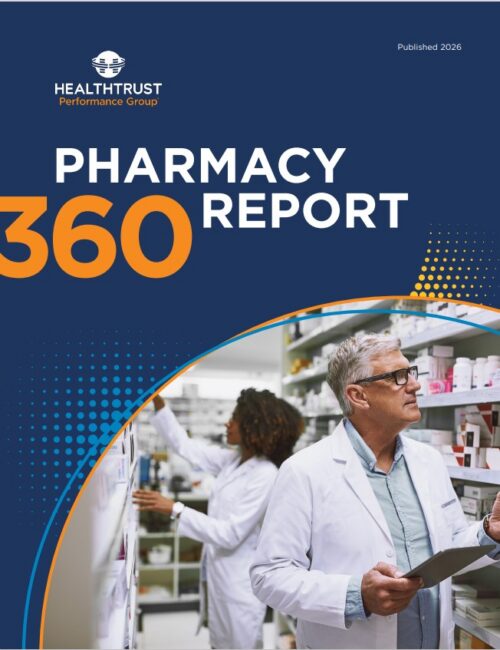
Pharmacy leaders are operating in an increasingly complicated policy and regulatory landscape. Tariff uncertainty, changes to the 340B Drug Pricing Program, compounding regulations and new reimbursement requirements under the NOPAIN Act are adding responsibility to an already demanding role. Staying compliant is now a strategic imperative that directly impacts affordability and access to patient care. These shifts also bring practical day-to-day challenges; more documentation, tighter audit expectations, and added training needs for pharmacists and technicians – often without additional time or staffing. HealthTrust’s inaugural Pharmacy 360 Report offers practical guidance for today’s policy, compliance and operational realities.
340B remains essential & increasingly complex to manage
The 340B Drug Pricing Program remains a critical and complex component of pharmacy operations. The program allows eligible health systems to access outpatient drugs at reduced prices, helping offset uncompensated care and expand services for vulnerable populations. In 2023, 340B purchases reached a record $66.3 billion, underscoring the program’s importance to the healthcare safety net. Yet ongoing policy debates and legal disputes continue to create uncertainty around eligibility, oversight and future program structure. To manage these uncertainties, organizations should integrate compliance and transparency into broader pharmacy and financial operations by:
- Prioritizing ongoing education to ensure leadership, clinicians and administrative teams understand program requirements and benefits
- Collaborating with peers and stakeholders, including advocacy groups and trusted external partners, to share best practices and improve efficiency
- Selecting the right third-party administrator (TPA) to support compliance, data integrity and revenue optimization, particularly for organizations with limited internal resources
The value of 340B is clear. For many hospitals and clinics, particularly those serving underserved communities, the program is essential to sustaining access to care amid rising drug costs. However, pharmacy leaders will need to continue navigating broader calls to restrict covered entities, shift to rebate-based models, and increase pharmaceutical oversight, all while responding to allegations of program misuse.
Expanding regulatory requirements raise the stakes for compliance
Beyond 340B, pharmacy leaders must also stay ahead of a growing set of regulatory considerations. Updates to USP <797> and <800>, enforceable since late 2023, have introduced new expectations for sterile compounding and hazardous drug handling, often requiring additional training, assessments and facility investments.
Meanwhile, the NOPAIN Act has reshaped outpatient pain management by enabling separate Medicare reimbursement for non-opioid treatments, creating both opportunity and operational complexity. The Inflation Reduction Act and a series of executive orders and tariff discussions add further uncertainty around future drug pricing and availability.
In this environment, vigilance and adaptability are essential, and proactive engagement with partners such as GPOs can help pharmacy teams navigate change while maintaining compliance and continuity of care. As policies continue to evolve, pharmacy leaders who stay informed, aligned and proactive will be best positioned to manage risk and support sustainable operations.
To keep pace, leaders should regularly review internal policies, refresh staff competencies and audit workflows against new guidance. Building a compliance calendar, documenting decisions and monitoring payer updates can reduce surprises and strengthen readiness for inspections, reimbursement changes and ongoing operational shifts.
YOUR TURN
Download the Pharmacy 360 Report or email the HealthTrust team at pharmacy360@healthtrustpg.com to discuss how you can enhance your organization’s pharmacy program.